

Genuine leather: what the FTC Guides say
The Guides do not define genuine leather. Here is what they do cover.
Disclosure: We may earn a commission if you buy through links on this page. It does not change our guidance. Affiliate Disclosure
Not a defined term
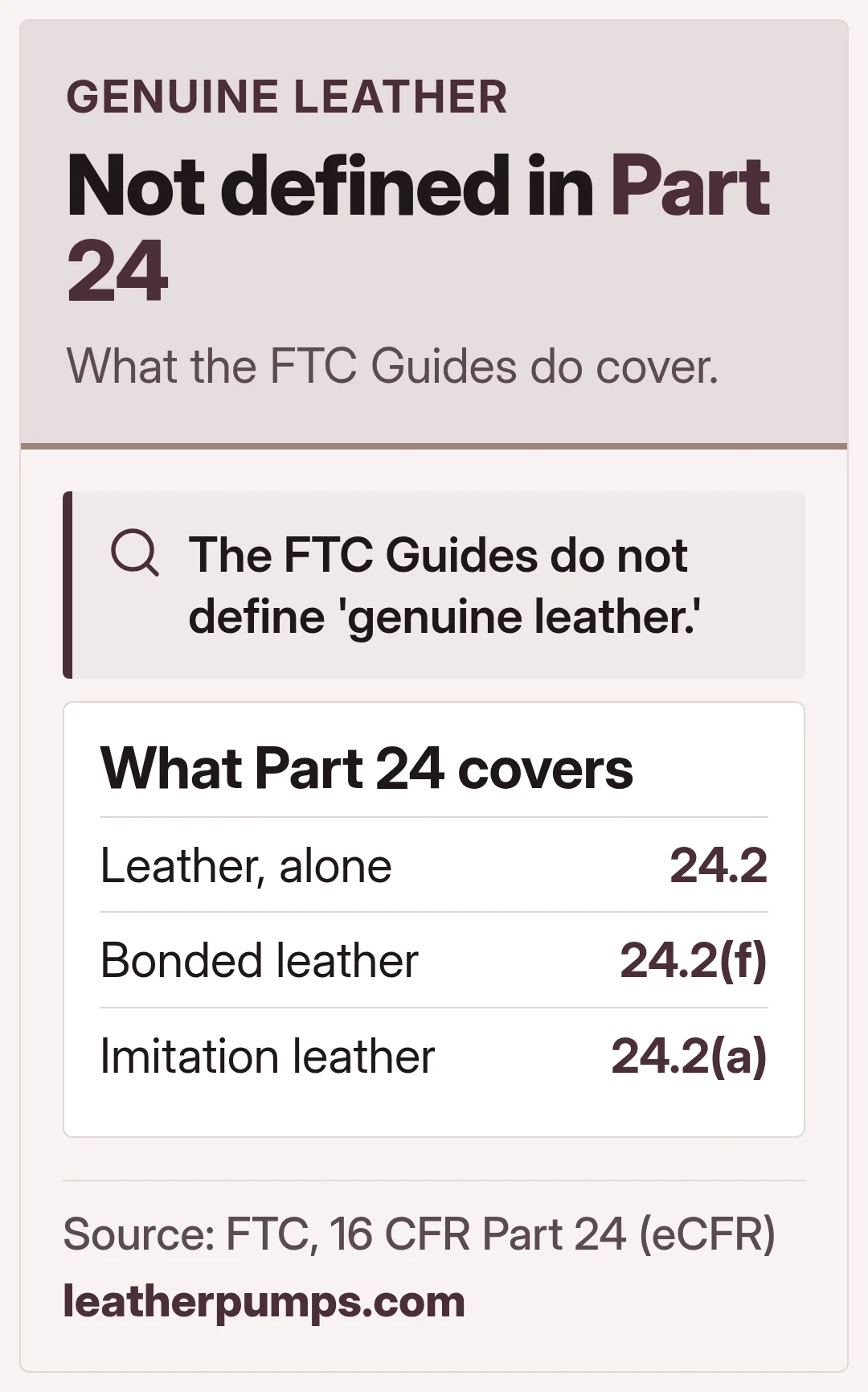
The FTC Guides do not define 'genuine leather.' Genuine leather on a label is the maker's term. We do not treat it as a grade.
What the Guides do cover
The FTC Leather Guides say it is "unfair or deceptive to use the unqualified term 'leather' or other unqualified terms suggestive of leather to describe industry products unless the industry product so described is composed in all substantial parts of leather."
Bonded material
The Guides say material with "ground, pulverized, shredded, reconstituted, or bonded leather" "should not be represented, directly or by implication, as being leather." Our bonded leather guide has more.
Read each part
For footwear, the Guides treat three parts separately: "the upper, the lining and sock, and the outersole." Read the label for each part.
This is general information, not legal or medical advice.
Sources: eCFR, 16 CFR Part 24, Guides for Select Leather and Imitation Leather Products.
FAQ
General information only, not medical advice. Material labels are the maker's: check the label for each part of the shoe. Fit varies by maker and by person, so check the maker's size chart and the return policy. If you have foot pain or a foot or health condition, talk to your doctor or a podiatrist.



Next: bonded leather
Not represented as leather.
