

Imitation and faux leather: the disclosure rule
What the FTC Guides say a label should disclose when a material looks like leather.
Disclosure: We may earn a commission if you buy through links on this page. It does not change our guidance. Affiliate Disclosure
The disclosure rule
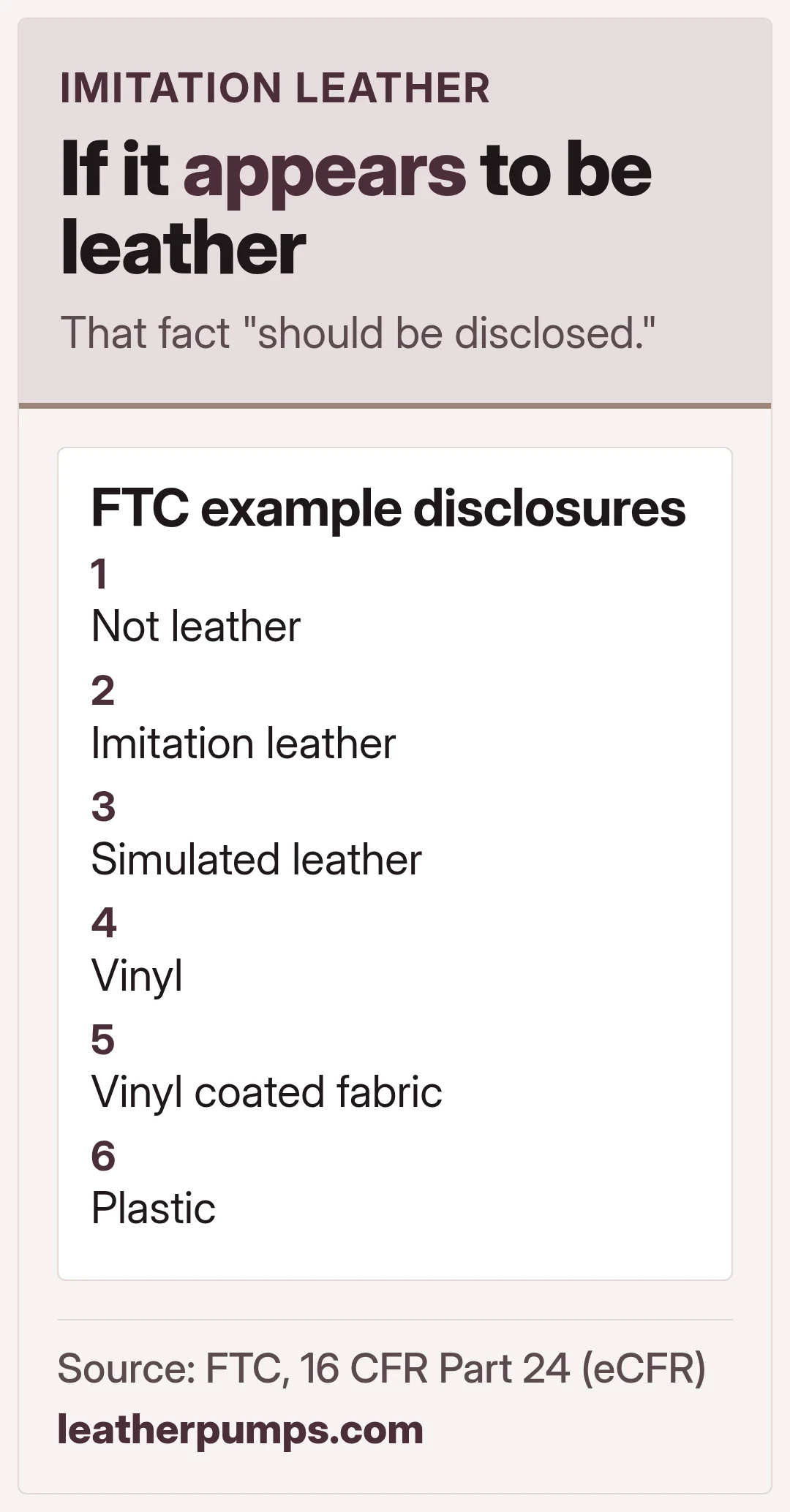
The Guides say that if non-leather material "appears to be leather," that fact "should be disclosed," with examples such as "Not leather; Imitation leather; Simulated leather; Vinyl; Vinyl coated fabric; or Plastic."
Faux and synthetic
Faux leather and synthetic leather are terms makers use on labels. The Guides' own examples include "Imitation leather" and "Simulated leather."
Hide-shaped tags
The Guides say a stamp, tag, label, or card "in the shape of a tanned hide or skin or in the shape of a silhouette of an animal" should not be used on a product that looks like leather but "is not made wholly or in substantial part from animal skin or hide."
Telling them apart
We do not give a home test or say how to tell materials apart. Read the label for each part of the shoe, and ask the maker.
Whose words these are
Material words on a shoe are the maker's label, not ours. We never say any shoe is leather.
This is general information, not legal or medical advice.
Sources: eCFR, 16 CFR Part 24, Guides for Select Leather and Imitation Leather Products.
FAQ
General information only, not medical advice. Material labels are the maker's: check the label for each part of the shoe. Fit varies by maker and by person, so check the maker's size chart and the return policy. If you have foot pain or a foot or health condition, talk to your doctor or a podiatrist.



Next: PU leather
A maker's term, read closely.
